
In every Hindu ritual, Pooja Samagri plays a vital role. These sacred items are not just accessories for worship, but symbols of devotion, purity, and spiritual energy. Each material is selected with care to invite divine grace, cleanse the environment, and enrich the ritual experience. Although the specific items may differ depending on the type of Pooja, the following essentials are among the most widely used, each carrying its own unique spiritual meaning.
Every Pooja Samagri carries a spiritual meaning — from flowers symbolizing devotion to camphor symbolizing the burning away of ego. Together, these materials create a sacred atmosphere where devotion flows naturally, ensuring the Pooja is complete and spiritually fulfilling.
Essential Pooja Materials
- Murthi / Deity Idols or Images – Central to every Pooja, representing the chosen deity.
- Pooja Thali – A decorated plate to hold all ritual items in an organized manner.
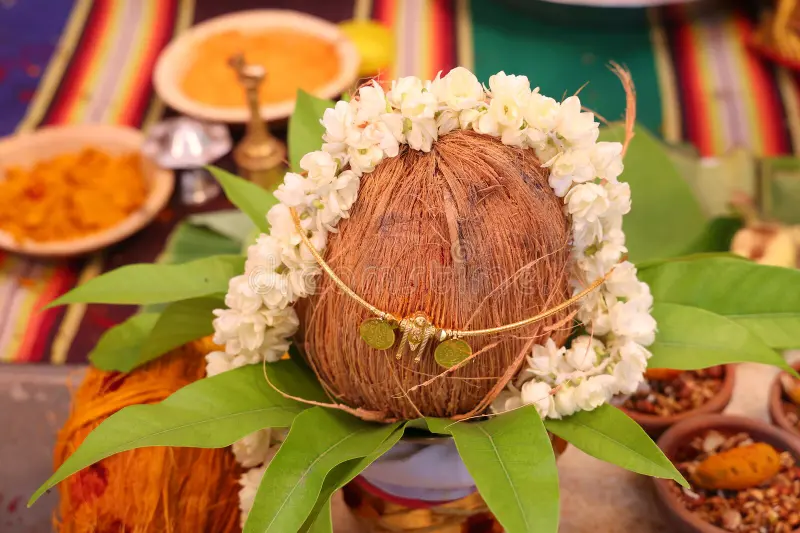
- Kalash (Sacred Pot) – Filled with water, topped with a coconut and mango leaves; symbolizes prosperity, wisdom, and purity.
- Gangajal (Holy Water) – Used for purification and sanctifying rituals.
- Bell (Ghanti) – Rung to invite divine presence and dispel negative energies.
- Conch Shell (Shankh) – Blown at the start and end of rituals, symbolizing purity and cosmic sound.
Offerings & Symbolic Items
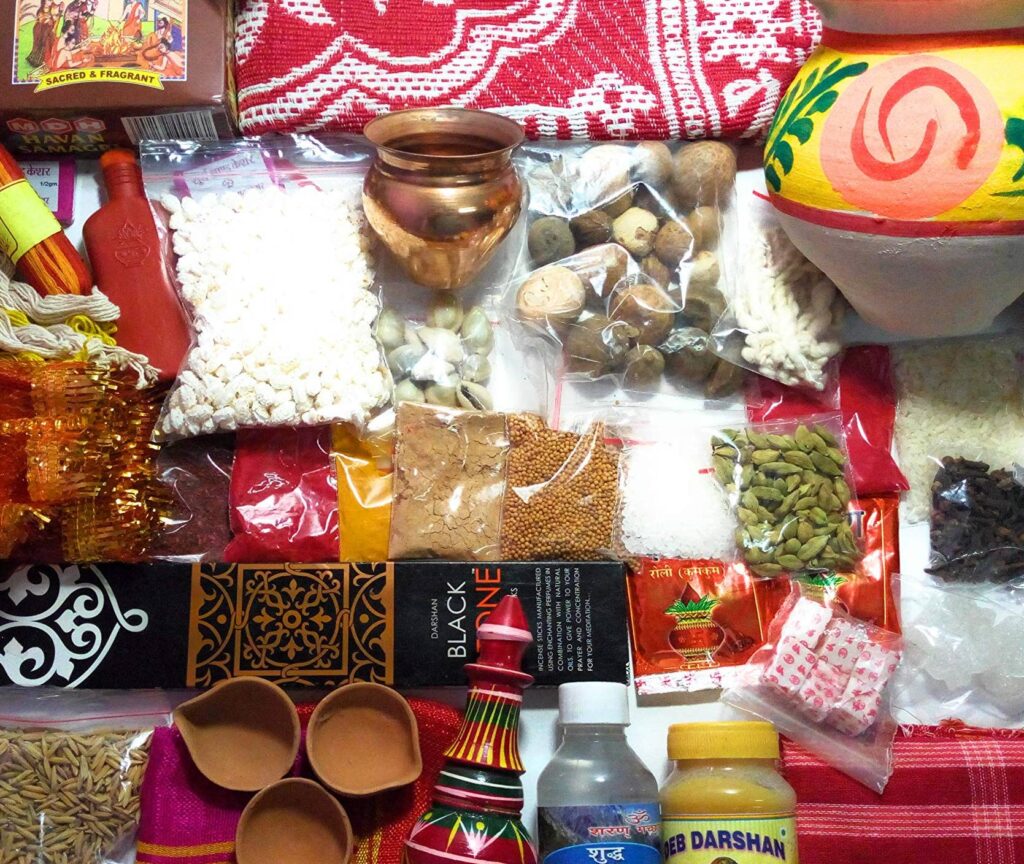
- Akshata (Rice Grains) – Unbroken rice grains used in offerings, symbolizing abundance.
- Turmeric (Haldi) – Signifies purity, health, and prosperity.
- Kumkum (Sindoor / Vermillion) – Sacred red powder for Tilak and auspiciousness.
- Chandan (Sandalwood Paste) – Used for Tilak, fragrance, and cooling energy.
- Flowers & Garlands – Offered to deities as a mark of devotion and beauty.
- Coconut – Broken as an offering, symbolizing surrender and removal of ego.
- Betel Leaves (Vethalai) & Betel Nuts (Supari) – Offered as a mark of respect and tradition.
- Fruits & Sweets (Naivedyam / Prasad) – Offered to deities and later shared as blessings.
- Panchamrit – A sacred mixture of milk, curd, ghee, honey, and sugar, offered to deities.
- New Garments – Offered to the deity as a sign of reverence.
Light, Fragrance & Purification
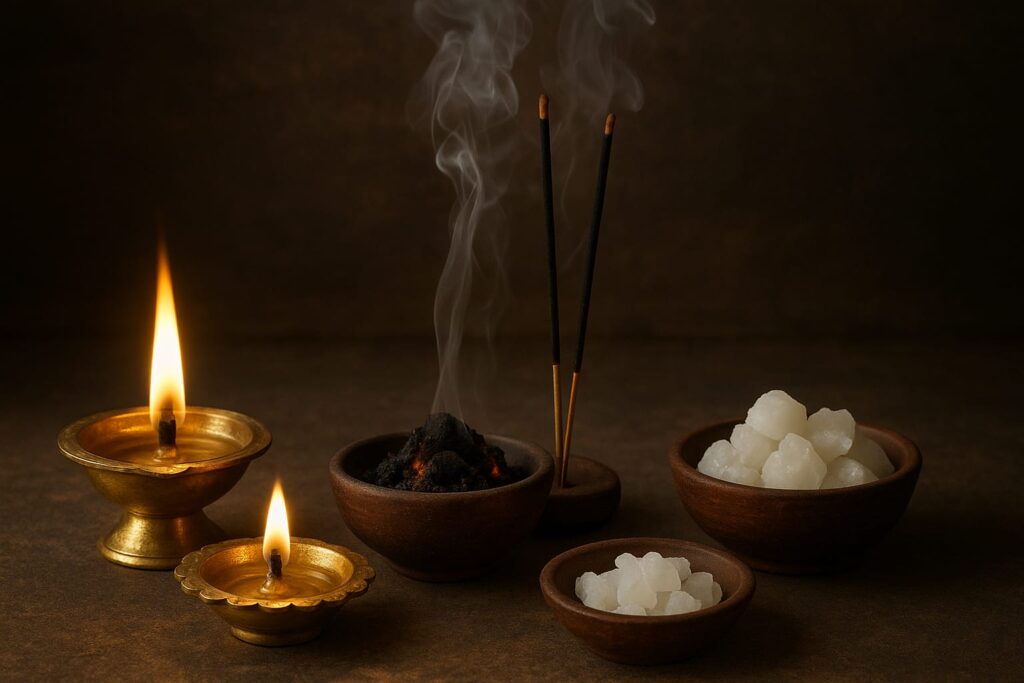
- Diyas (Ghee or Oil Lamps) – Lit to remove darkness and invite divine light.
- Incense Sticks (Agarbatti) – Creates a fragrant and sacred atmosphere.
- Sambrani (Benzoin Resin) – Burnt for purification and to create positive vibrations.
- Camphor (Karpooram / Kapoor) – Burnt during Aarti, symbolizing destruction of ego and negativity.
Special Ritual Items
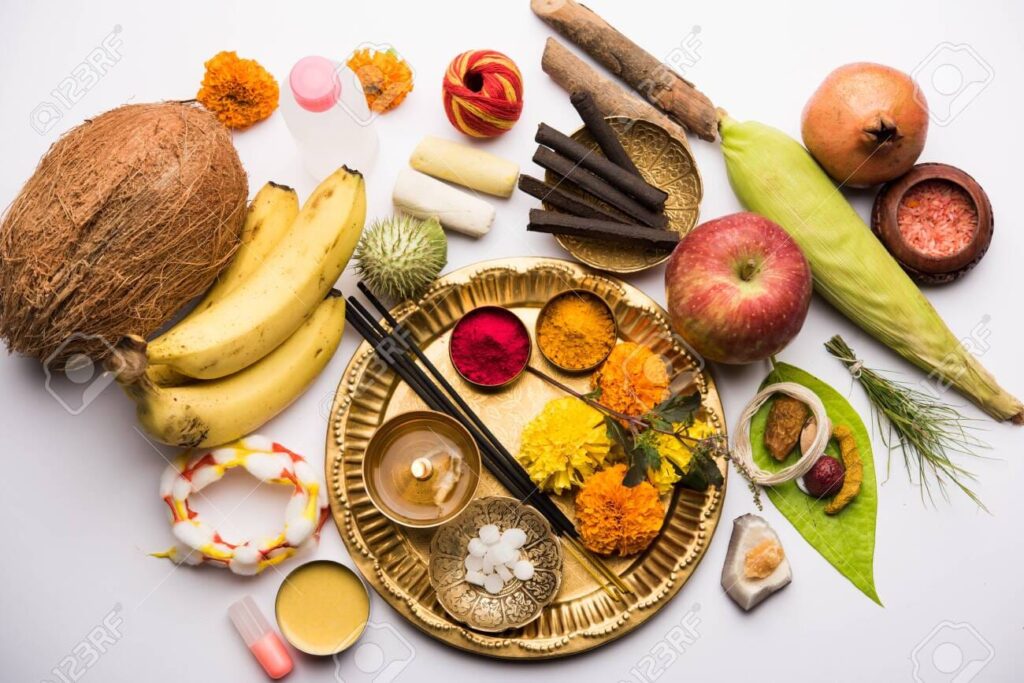
- Aarti Plate – Used during the final worship ritual with diya, flowers, and camphor.
- Ashtagandha / Herbal Powders – Fragrant mixtures used for deity decoration and sanctification.
- Darba Grass (Kusha Grass) – Considered sacred, used in many Vedic rituals.
- Tulsi Leaves – Holy basil leaves, especially dear to Lord Vishnu.
- Banana Leaves – Used for offerings and prasadam serving in many South Indian traditions.
- Sacred Thread (Janeyu / Yajnopavitam) – Used in rituals and worn during certain ceremonies.
- Kalava (Red Sacred Thread / Raksha Sutra) – Tied on the wrist as protection and blessing.
- Honey & Ghee – Offered during Havan/Homam as part of oblations.
- Copper / Brass Utensils – Used for holding holy water, milk, and other offerings.